

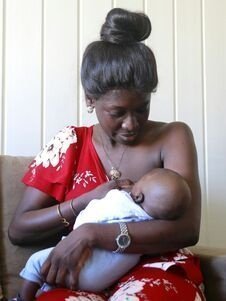
Smelling good is part of everyday life for many people. For new mothers—especially those battling postpartum mood swings—wearing perfume may feel comforting and familiar. However, an important question arises: Is wearing perfume around your baby safe?
Why Are So Many Healthy People Suddenly Collapsing?
Because babies are fragile and extremely sensitive to chemical exposure, it’s essential to understand how fragrances can affect them before making a daily habit of perfume use. This article answers the most common questions nursing mothers have, including:
- Can I wear perfume around my baby?
- Why might perfume be unsafe for babies?
- Can perfume cause my baby to become dizzy or short of breath?
- Will perfume cause long-term health issues?
- Can my baby wear baby perfume?
Read to the end to make an informed, medically sound decision.
Can I Wear Perfume Around My Baby?
Although not yet proven beyond a reasonable doubt, several studies suggest that certain chemicals found in perfumes may pose risks to developing babies. Because nursing mothers spend extended hours in close contact with their babies, these infants may inhale fragrance molecules continuously.
For this reason, it is not advisable to wear strong or highly concentrated perfumes around your baby, especially during the early months when their organs are still developing.
Perfume can be emotionally comforting to mothers experiencing postpartum stress or depression, but this comfort should not come at the expense of the baby’s health.
Why Shouldn’t I Wear Perfume Around My Baby?
Infants have immature respiratory and immune systems. While adults tolerate fragrance chemicals well, babies may react differently.
The primary concern is a chemical called phthalates.
Phthalates are commonly used in cosmetics and fragrances to extend the longevity of scents. Research shows that phthalates may:
- Lower testosterone levels in boys later in puberty
- Trigger precocious puberty in girls.
Disrupts hormonal balance in developing infants
- Affects reproductive health later in life.
Not all ingredients in perfume are harmful, but phthalates are strongly implicated in the adverse effects associated with early fragrance exposure.
Will My Baby Collapse From Perfume Inhalation?
There is no scientific evidence that perfume inhalation will cause a baby to collapse.
However, babies may become:
- Dizzy
- Irritable
- Drowsy
- Short of breath
Exposure to intense fragrance can irritate their delicate airways and increase breathing effort.
Mothers do not need to avoid every type of fragrance. The main perfumes of concern are:
- Strongly scented perfumes
- Long-lasting fragrances
- Products containing high phthalate concentrations
Safe alternatives include:
✔ Essential oils (used lightly)
✔ Natural, phthalate-free perfumes
✔ Mildly scented body creams
Natural fragrances do not contain phthalates and are generally safer for close contact with infants.
Can Wearing Perfume Cause Health Issues in My Baby?
Based on available studies, babies exposed to perfume may be at risk of several short- and long-term health issues. These include:
Immediate or short-term reactions:
- Coughing
- Sneezing
- Nasal irritation
- Headache
- Dizziness
- Tachypnoea (fast breathing)
- Allergic reactions
- Aggravation of asthma symptoms
Long-term risks associated with early phthalate exposure:
- Higher likelihood of developing asthma in childhood or adulthood
- Increased risk of obesity
- Possible hormonal imbalance
- Potential fertility concerns later in life
Even adults sometimes struggle with strong perfumes in poorly ventilated spaces—what is uncomfortable for adults can be overwhelming for infants.
Close-contact risks
When nursing mothers hold their babies to the chest or shoulder, a strong fragrance can feel suffocating to the baby. Prolonged difficulty breathing can cause:
- Persistent crying
- Fatigue
- Irritability
- Headaches
Because babies cannot verbally express discomfort, crying may be their only means of communication.
Breastfeeding and perfume
Perfume or body spray applied to the chest may expose the baby to:
- Chemical ingestion
- Nasal irritation
- Difficulty latching due to strong odors
Makes avoiding perfume on the chest area essential for breastfeeding mothers.
When Can I Start Wearing Perfume Again?
As babies grow, their organ systems mature and can better handle small exposures. Many mothers resume perfume:
- 1–2 months postpartum
- After exclusive breastfeeding
- When the baby becomes less sensitive
There is no strict rule—observe your baby’s reactions and choose mild or natural scents first.
Can I Wear My Baby’s Perfume? Is Baby Perfume Safe?
Yes—babies can wear perfume, but only products formulated for infants. Baby perfumes are:
- Mild
- Free from harsh alcohol
- Free from parabens and phthalates
- Designed to be gentle on skin and airways
Benefits of baby perfumes:
- Pleasant scent
- Better mood and calmness
- Gentle scent memories that strengthen bonding
- Improved freshness without irritation
However, precautions still apply.
The Truth About GMOs: Separating Health Myths from Scientific Facts in Nigeria
Safety tips for baby perfume:
- Choose products free from alcohol, parabens, and phenoxyethanol
- Do NOT apply directly to the skin.
- Apply only to the baby’s clothing.
- Avoid over-spraying after a diaper change.
- Avoid strongly scented formulations.